Understanding Birth Injuries & Pregnancy Complications: Cerebral Palsy, Preeclampsia, and HIE
Birth trauma injuries can occur even during otherwise uneventful births. Most birth injuries aren’t serious and require little or no care, but in rare cases complications during the labor and delivery process can have devastating consequences. Keep reading to learn about three common birth injuries to newborns including cerebral palsy, preeclampsia and hypoxic-ischemic encephalopathy (HIE), and what to do if you suspect your loved one was harmed by medical negligence during labor or delivery.
Disclaimer: This article is for informational purposes only and does not constitute legal advice. Medical malpractice claims are highly fact-specific, and deadlines can be unforgiving. For guidance about your situation, contact Meinhart & Manning, PLLC for a free consultation.
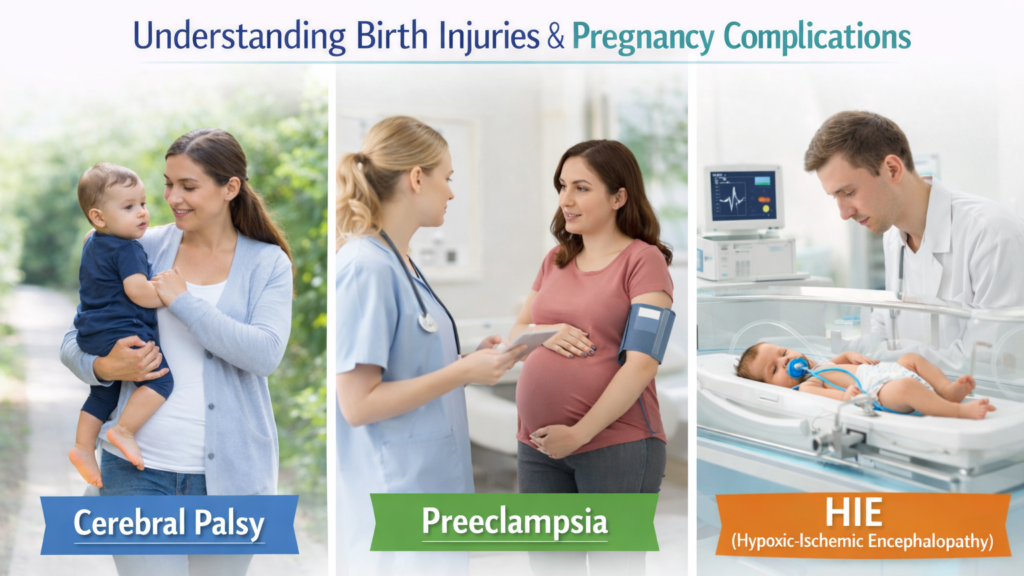
What Are Birth Injuries & Birth Injury Complications?

The birth of a newborn should be a joyful occasion, but sometimes this happy event is marred by an injury during the birth process and subsequent medical complications afterward. Birth injuries, also known as neonatal birth trauma, are injuries that happen to a baby during labor and delivery. While modern medical advancements have significantly reduced the severity and frequency of birth trauma injuries and complications, occasionally rare and severe birth injuries do occur, resulting in long-term consequences for both mother and child. As experienced medical malpractice attorneys practicing in Kentucky, our lawyers have worked with countless families navigating birth injury complications. In this article, our team of birth injury attorneys explore three common birth injuries and complications: cerebral palsy (CP), preeclampsia, and hypoxic-ischemic encephalopathy (HIE).
What Is Cerebral Palsy?
Cerebral palsy (CP) is an umbrella term for a group of conditions that affect nerve and muscle development, with impairments to movement and posture. CP is caused by damage that occurs to the developing brain, most often before birth. While some cases of cerebral palsy also involve sensory and cognitive issues including developmental delays and epilepsy, these additional complications are not required for a CP diagnosis. Symptoms appear during infancy or preschool years, varying from mild to serious, and do not worsen or improve over time. Commonly observed symptoms of cerebral palsy include:
- Muscle Tone Impairment: Children with cerebral palsy may have irregular posture. The arms, legs and trunk may appear floppy or overly stiff – a condition known as spasticity. As a result of muscle tone impairment, children with CP may exhibit movements that can’t be controlled, unsteady walk, and exaggerated reflexes. People with CP may have a reduced range of motion in their joints due to muscle stiffness.
- Milestone Delays: Delays in reaching common childhood milestones and developmental markers such as crawling, standing and walking are common.
- Fine Motor Skill Issues: Many children with CP experience difficulties with fine motor skills and coordination, impacting everyday activities like holding a pencil or learning to feed themselves with a fork and spoon.
- Speech & Cognitive Delays: While some people with CP experience intellectual disabilities and delays in speech, others do not. The presence of speech and cognitive delays are not required for
- Difficulty Swallowing: Cerebral palsy can make it difficult to swallow. Children with CP may experience difficulty using their mouth, impacting latching during breastfeeding and eating.
What Causes Cerebral Palsy?
The cause of cerebral palsy and its effects vary from person to person. While some people with CP can function with little assistance, others may require part-time or full-time care. Similarly, some people with CP experience intellectual disabilities and cognitive impairments including epilepsy, blindness or deafness, while others experience only physical symptoms. While the exact cause of cerebral palsy is largely unknown, most cases are believed to be caused by trauma to the fine motor centers in the brain either in utero or during birth. In cases where medical malpractice is present, failure to diagnose such as failure to discover a prolapsed umbilical cord can be the cause for delayed diagnosis. There is no cure for cerebral palsy, but treatments can help improve function and quality of life.
What Is Preeclampsia?
Preeclampsia is a complication of pregnancy, usually beginning after 20 weeks of pregnancy in women whose blood pressure had previously been in the standard range. The defining feature of preeclampsia is high blood pressure, proteinuria (high levels of
protein in the urine that may indicate kidney damage), or other signs of damage to the kidneys or other organs. If left untreated, preeclampsia can lead to serious, even fatal complications for both the mother and baby. Early delivery of the baby is often recommended, with the timing of delivery depending on the severity of condition and the development of the fetus. Preeclampsia requires careful monitoring of blood pressure to manage and mitigate complications. In some cases, postpartum preeclampsia can also occur, where preeclampsia develops after the delivery of a baby.
Symptoms of Preeclampsia
Many mothers have no noticeable symptoms: the first signs of preeclampsia are often detected during routine prenatal checkups. Some symptoms of preeclampsia include:
- Proteinuria (excess protein in urine)
- Decreased levels of platelets in blood (thrombocytopenia)
- Increased liver enzymes
- Severe headaches
- Changes in vision, including temporary loss of vision, blurred vision or light sensitivity
- Shortness of breath caused by fluid in the lungs
- Pain in the upper belly, usually under the ribs on the right side
- Nausea or vomiting
- Sudden weight gain or sudden appearance of edema, especially in the face and hands
What Causes Preeclampsia?
Medical experts believe preeclampsia begins in the placenta, which is the organ that nourishes the fetus throughout pregnancy. In the early stages of pregnancy, new blood vessels develop to support the placenta with oxygen and nutrients. In mothers with preeclampsia, these blood vessels don’t develop properly, affecting blood circulation to the placenta and dysregulation of blood pressure in the mother. While the exact cause of preeclampsia likely involves several factors, a missed or delayed diagnosis is a common cause for preeclampsia medical malpractice cases. Failure to monitor or diagnose, including ignoring troubling warning signs like high blood pressure, high protein values in the urine or edema, as well as improper treatment or management of those symptoms can be grounds for a medical malpractice or birth injury lawsuit in Kentucky.
What Is Hypoxic-Ischemic Encephalopathy (HIE)?

Hypoxic-ischemic encephalopathy (HIE) is a serious brain injury resulting from oxygen and blood deprivation to the brain. While most commonly seen in newborns who experienced a difficult or traumatic birth, HIE can also impact older children and adults who experience severe respiratory distress like drowning. A lack of oxygen at birth can permanently change how the brain functions: HIE can cause permanent brain damage or death in severe cases. Your child’s healthcare provider may also refer to HIE as:
- Birth asphyxia
- Neonatal encephalopathy
- Perinatal hypoxia
Your child’s healthcare provider will grade HIE on a scale as mild, moderate or severe based on your child’s prognosis.
What Are The Symptoms of HIE?
HIE is categorized into three levels, mild, moderate, or severe, based on the child’s symptoms and prognosis. Mild and moderate symptoms of HIE in newborns include:
- Weak muscle tone or “floppy” posture (hypotonia), or tense muscles and rigid posture (hypertonia)
- Difficulty feeding
- Fatigue
- Irritability
- A weak cry
- Pale, bluish or gray tone to the skin, particularly on the fingers and lips (cyanosis)
Severe symptoms of HIE in newborns include:
- Little to no response to external stimuli including touch or sound
- Poor reflexes
- Abnormal breathing patterns
- Irregular or slow heartbeat
- Seizures
- Loss of consciousness
If your child experiences any symptoms of HIE, call 911 or seek emergency medical attention immediately. Even mild to moderate HIE is an emergency requiring immediate medical attention.
What Causes Hypoxic-Ischemic Encephalopathy (HIE)?
HIE is caused by an interruption of blood and oxygen supply to the brain. Causes of HIE during gestation include abnormal development or function of a fetus’ heart or lungs, an infection during pregnancy, blood pressure that is too high or too low in the pregnant mother, or low oxygen levels in the pregnant mother. Mothers who experience a difficult pregnancy or labor and delivery may be at a higher risk of delivering a newborn with HIE.
What Complications Are Associated With HIE?
HIE is a serious, sometimes fatal, condition that can lead to complications caused by permanent brain damage. Newborns and children with HIE may experience complications including:
- Developmental delays
- Delays reaching growth milestones
- Hearing or vision loss
- Intellectual disability and issues with cognitive function
- Epilepsy
- Cerebral palsy
- Increased susceptibility to infections
Many complications of HIE don’t appear until a child reaches school age, with many parents noticing issues once their child misses developmental milestones or struggles in the classroom. Some children with HIE benefit from additional support like physical or occupational therapy, speech therapy, early intervention educational programs, or assistive devices like eyeglasses or hearing aids. While not all babies with HIE make a complete recovery, full recovery after HIE is possible in some cases. Prompt diagnosis and treatment of HIE can prevent further brain damage, improving the prognosis for some children.
What Are Some Common Symptoms of Birth Injuries?
Birth injuries run the gamut from mild to severe, and can cause a wide range of symptoms. Immediately after a baby is born, assessments like the APGAR Test are administered to assess the baby’s health and cognitive function and determine if any injuries were sustained during the labor and delivery process. While symptoms are often specific to each type of birth injury, some examples of birth injury symptoms include:
- Visible changes in appearance like bruising, swelling or petechiae (discolored spots on the skin)
- Not moving certain body parts due to fractures, pain or nerve injuries
- Difficulty feeding
- Crying, fussiness or other behavioral changes
- Hoarseness or stridor (noisy breathing) while crying
How Are Birth Injuries Diagnosed?
Ob/Gyns, neonatologists and perinatologists can diagnose birth injuries in newborns, often immediately after delivery. Medical professionals use a combination of methods to diagnose birth injuries, including:
- Physical Examination: A physical exam including an APGAR Test is standard procedure after delivery. A physical exam generally assesses appearance, pulse, grimace response, activity (including muscle tone and response), and respiration to check for congenital conditions and birth injuries immediately after birth.
- Diagnostic Imaging: Doctors will use brain ultrasound, CT scans or X-rays to detect various injuries to your baby’s body, particularly those not visible from the outside. In less common cases, MRIs (magnetic resonance imaging) may also be used to help diagnose a suspected problem.
- Lab Tests: Lab analysis like simple blood tests can help your baby’s medical team diagnose certain birth injuries or birth-related complications.
What Factors Contribute To Birth Injuries?
Most common birth injuries are caused by difficulty during labor and delivery, including attempts to move or reposition the baby during labor or delivery or the use of assistive devices or tools like forceps or vacuum extraction. Complications may arise if the baby has difficulty moving through the birth canal (like with shoulder dystocia) and injury can even occur from the force of natural muscle contractions in the birth canal during delivery. Some risk factors and conditions linked to difficult birth may include:
- High Birth Weight: Babies weighing more than 8 pounds, 13 ounces (4 kilograms) are more likely to experience birth injuries.
- Low Birth Weight: Babies born prematurely (before 37 weeks) or with a low birth weight may be more easily injured.
- Abnormal Positioning: Babies have a higher risk of birth injury if they aren’t oriented the correct way. An example of this is breech positioning, where the baby is delivered buttocks-first.
- Cephalopelvic Disproportion: The size and shape of the mother’s pelvis compared to the size of the baby’s head can be a contributing factor. While some babies are simply born with a larger head, certain medical conditions can also cause a larger head size, which can cause complications for vaginal delivery and may necessitate delivery via cesarean section (aka C-Section).
- Difficult Labor and Delivery: Prolonged labor or difficult childbirth, also known as dystocia, can increase the likelihood of birth injuries.
- Precipitous Birth: While the idea of a speedy delivery may sound appealing, a birth that happens much faster than usual can also cause complications and birth injury.
When to Contact to a Kentucky Birth Injury Attorney (Free Consultation)
If you believe your loved one has been harmed by medical negligence, don’t hesitate: contact Meinhart & Manning, PLLC today for a free consultation. We’ll help you understand your legal rights, evaluate your claim with expert medical insight, and advocate for the justice your family deserves. Medical malpractice cases including birth trauma and birth injury are notoriously complex. While not every mistake or injury that occurs during labor and delivery meets the criteria for substandard care by the medical provider, we encourage you to reach out to a medical malpractice attorney in Louisville for a free case evaluation. Our experienced attorneys partner with trusted medical experts to efficiently evaluate your case, determine what went wrong, and build a strong, evidence-backed claim on your behalf.
There is no cost to speak with us about your situation, and no fee unless we win. Due to Kentucky’s one-year statute of limitations, time is of the essence: don’t wait to get legal advice. Our team is here to answer your questions, provide straightforward feedback about the viability of your case, and empower you to seek the best resolution possible for your family.
At Meinhart & Manning, PLLC, we pride ourselves on providing compassionate yet tenacious representation for injury victims across Kentucky. Contact us today to schedule your free consultation and let our Kentucky medical malpractice lawyers help you determine the best path forward.